Beyond the Basics: Real Life Homeschooling
What's Popular
Admissions Decision-Making Models: How U.S. Institutions of Higher Education Select Undergraduate Students
Getting Organized Part 2
Chinuch At Home
JewishMusic.com

Only Child: Writers on the Singular Joys and Solitary Sorrows of Growing Up Solo
How Can You Begin Homeschooling? Start!
Catholics Using Konos
Homeschooling: How We Do It
Homeschool Fun for Silicon Valley Teens
AP, CLEP, DE, and Honors Courses
So Cal Homeschool Teen Connection
Inexpensive Educational Supplies
Shining Children with Radical Unschooling
Federal Student Aid (FSA)
Ethel M Chocolate Factory and Botanical Cactus Garden
Resources

Smart Mouth
Smart Mouth is a quick-thinking shout-it-out hilarious word game that helps build vocabulary skills. It includes variations of the rules for category play and for younger players. Players slide the Letter Getter forward and back to get two letters. The first player to shout out a word of five or more letters using those letters wins the round. The game includes tips for teachers. This is a fun game to play with children and adults together.

Home Schooling from Scratch : Simple Living, Super Learning

Catholic Home Schooling: A Handbook for Parents

The Work-at-Home Sourcebook

Homeschooling on a Shoestring : A Jam-packed Guide

One Thing at a Time : 100 Simple Ways to Live Clutter-Free Every Day
Those piles of papers, clothes, and other things you thought you'd successfully de-cluttered have returned, and this time they brought friends. What's the use of trying to fight the clutter? Is there a better way?
This powerful and useful guide delivers solutions that work, no matter how overwhelmed you feel. The answer isn't an elaborate new system, or a solemn vow to start tomorrow. Instead, psychotherapist and organizer Cindy Glovinsky shares 100 simple strategies for tackling the problem the way it grows--one thing at a time. Here's a sampling of the tips explained in the book:
*Declare a fix-it day
*Purge deep storage areas first
*Label it so you can read it
*Get a great letter opener
*Practice toy population planning
*Leave it neater than you found it
Written in short takes and with a supportive tone, this is an essential, refreshing book that helps turn a hopeless struggle into a manageable part of life, one thing at a time.

Field Trips: Bug Hunting, Animal Tracking, Bird-watching, Shore Walking
With Jim Arnosky as your guide, an ordinary hike becomes an eye-opening experience. He'll help you spot a hawk soaring far overhead and note the details of a dragonfly up close. Study the black-and-white drawings -- based on his own field research -- and you'll discover if those tracks in the brush were made by a deer or a fox.
In his celebrated style, this author, artist, and naturalist enthusiastically shares a wealth of tips. Jim Arnosky wants you to enjoy watching wildlife. He carefully explains how field marks, shapes, and location give clues for identifying certain plants and animals wherever you are. He gives hints for sharpening observational skills. And he encourages you to draw and record birds, insects, shells, animal tracks, and other finds from a busy day's watch.

Educational Travel on a Shoestring : Frugal Family Fun and Learning Away from Home

The Letter Factory Game
Happy Phonics

Black Books Galore's Guide to Great African American Children's Books
These are exciting times for African American children's literature. Never before have there been so many titles available. Now the three mothers who founded Black Books Galore! —the nation's leading organizer of festivals of African American children's books —share their expert advice on how to find and choose the best. This fully annotated guide opens the door to a wonderful world of reading for the children in your life. Here are the most positive, the best-written, and the most acclaimed books in every category, including board books, story and picture books, fiction, nonfiction, poetry, history, biography, fables, and more.
Invaluable for parents, teachers, and librarians, this easy-to-use, illustrated reference guide features:
- Quick, lively descriptions of 500 books, plus 200 additional recommendations
- Helpful guidelines for encouraging young readers
- Easy-to-find listings organized by age level and indexed by title, topic, author, and illustrator
- Portraits of selected authors and illustrators
- Listings of award winners and Reading Rainbow Books.

The Successful Homeschool Family Handbook

Home Organizing Workbook: Clearing Your Clutter, Step-By-Step

Organizing Plain and Simple: A Ready Reference Guide With Hundreds Of Solutions to Your Everyday Clutter Challenges
Organizing Plain & Simple is like a course from an expert teacher, grounded in the fundamentals and enriched with philosophy, tips, anecdotes, illustrations - everything necessary to make home and life run more smoothly. Donna Smallin takes a personalized, nonjudgemental approach to explaining how to assess each individual's situation and suggesting where to start organizing - room by room - and then covers how to stay organized. Then she offers advice on organizing time and finances, as well as organizing for the seasons and for special events - the birth of a baby, combining households, a move, kids going off to college, successful downsizing. Smallin presents a broad range of innovative solutions in the running feature "One Challenge, Three Solutions" that includes tips for solving classic organizational issues from a wide range of professional organizers.

Morning by Morning : How We Home-Schooled Our African-American Sons to the Ivy League
But ultimately, Paula and C. Madison felt that they knew what was best for their sons. So in 1991—when Evan was nine and twins Charles and Damon were eleven—the children were withdrawn from the exclusive country day school they’d been attending.
In Morning by Morning, Paula Penn-Nabrit discusses her family’s emotional transition to home schooling and shares the nuts and bolts of the boys’ educational experience. She explains how she and her husband developed a curriculum, provided adequate exposure to the arts as well as quiet time for reflection and meditation, initiated quality opportunities for volunteerism, and sought out athletic activities for their sons. At the end of each chapter, she offers advice on how readers can incorporate some of the steps her family took—even if they aren’t able to home-school; plus, there’s a website resource guide at the end of the book.
Charles and Damon were eventually admitted to Princeton, and Evan attended Amherst College. But Morning by Morning is frank about the challenges the boys faced in their transition from home schooling to the college experience, and Penn-Nabrit reflects on some things she might have done differently.
With great warmth and perception, Paula Penn-Nabrit discusses her personal experience and the amazing outcome of her home-schooling experience: three spiritually and intellectually well balanced sons who attended some of the top educational institutions in this country.
What we learned from home schooling:
-Use your time wisely.
-Education is more than academics.
-The idea of parent as teacher doesn’t have to end at kindergarten.
-The family is our introduction to community.
-Extended family is a safety net.
-Yes, kids really do better in environments designed for them.
-Travel is an education.
-Athletics is more than competitive sports.
-Get used to diversity.
-It’s okay if your kids get angry at you—they’ll get over it!
-from Morning by Morning

LeapPad Game - Mind Wars Interactive Game

Real-Life Homeschooling: The Stories of 21 Families Who Teach Their Children at Home
The book that shows homeschooling in action!
What does it really mean when parents say they homeschool their child or children? For Rhonda Barfield -- a homeschooler for the past 10 years -- the definition is as diverse as the 21 families she studies in this eye-opening book.
Real-Life Homeschooling
From the city to the country, apartments to split-levels, you'll enter each household and see education in action. Discover the challenges and rewards of tailoring instruction to each child's needs while catering to his or her inquisitiveness and curiosity. See why the number of children being taught by their parents is growing nationwide -- at home, there are no overcrowded classrooms, no unknown dangers lurking in the halls, and no doubts as to the quality of the education.
Whether you are just contemplating homeschooling or are a veteran seeking fresh ideas and help in overcoming obstacles -- look no further: Real-life Homeschooling shows just how practical and rewarding it is to educate children and provide them with what they need most -- you!

The Organizing Sourcebook : Nine Strategies for Simplifying Your Life
The nine habits of highly organized people
Organizing consultant Kathy Waddill demonstrates how the simple act of being organized can improve your quality of life. In The Organizing Sourcebook, she presents nine organizing principles that can easily be applied to any situation, activity, or environment. The book gives you the tools for managing time; decreasing stress; and dealing with cultural, personal, and emotional change. Case histories illustrate how each strategy solved a specific problem.
Only Child: Writers on the Singular Joys and Solitary Sorrows of Growing Up Solo
In this unprecedented collection, writers like Judith Thurman, Kathryn Harrison, John Hodgman, and Peter Ho Davies reflect on the single, transforming episode that defined each of them as an only child. For some it came while lurking around the edges of a friend’s boisterous family, longing to be part of the chaos. For others, it came in sterile hospital halls, while single-handedly caring for a parent with cancer. They write about the parents who raised them, from the devoted to the dismissive. They describe what it’s like to be an only child of divorce, an only because of the death of a sibling, an only who reveled in it or an only who didn’t.
In candid, poignant, and often hilarious essays, these authors—including the children of Erica Jong, Alice Walker, and Phyllis Rose—explore a lifetime of onliness. As adults searching for partners, they are faced with the unique challenge of trying to turn a longtime trio into a quartet. In deciding whether to give junior a sib, they weigh the benefits of producing the friend they never had against the fear that they will not know how to divide their love and attention among multiples. As they watch their parents age, they come face-to-face with the onus of being their family’s sole historian.
Whether you’re an only child curious about how your experiences compare to others’, the partner or spouse of an only, a parent pondering whether to stop at one, or someone with siblings who’s always wondered how the other half lives, Only Child offers a look behind the scenes and into the hearts of twenty-one smart and sensitive writers as they reveal the truth about growing up—and being a grown-up—solo.
From the Hardcover edition.

So You're Thinking About Homeschooling: Fifteen Families Show How You Can Do It
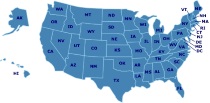
Looking for Another State?
Featured Resources
As an Amazon Associate, we earn from qualifying purchases. We get commissions for purchases made through links on this site.

The Trivium: The Liberal Arts of Logic, Grammar, and Rhetoric
The Letter Factory Game

Pass Your California DMV Test Guaranteed! 50 Real Test Questions! California DMV Handbook

The Case for Classical Christian Education
